Argentina Risk FIFA Punishment After Falklands Banner Controversy Following England Win
Argentina could face a FIFA fine after players held up a “Las Malvinas son Argentinas” banner following their 2-1 World Cup semi-final win over England.
Argentina’s dramatic 2-1 World Cup semi-final victory over England has been overshadowed by controversy after several players held up a political banner during post-match celebrations in Atlanta, putting the Argentine Football Association (AFA) at risk of FIFA sanctions.
What Happened
Moments after the final whistle, defender Lisandro Martinez and midfielder Giovani Lo Celso were seen grinning and waving to fans while holding up a banner reading “Las Malvinas son Argentinas” — “The Falklands are Argentine.” It remains unclear exactly how the banner made its way onto the pitch or who supplied it.
The gesture instantly reignited one of football’s oldest political flashpoints, tying a World Cup celebration to the long-running sovereignty dispute between Argentina and the United Kingdom over the Falkland Islands.
Why FIFA Could Step In
Under International Football Association Board (IFAB) rules, which FIFA enforces at major tournaments, political statements are strictly banned from the pitch.
Equipment and displays are not permitted to carry political, religious, or personal slogans, and FIFA regulations explicitly prohibit banners, flags, or paraphernalia of a “political, offensive, and/or discriminatory nature” inside stadiums. Any breach can lead to sanctions against the player, the team, or the national association.
This isn’t unfamiliar territory for Argentina. Back in 2014, FIFA fined the AFA around $36,000 after players displayed a similar Falklands banner following a friendly win over Slovenia. Given that precedent, a fresh fine looks likely, though FIFA has not yet issued an official statement on the incident.
The Falklands Conflict: A Brief History
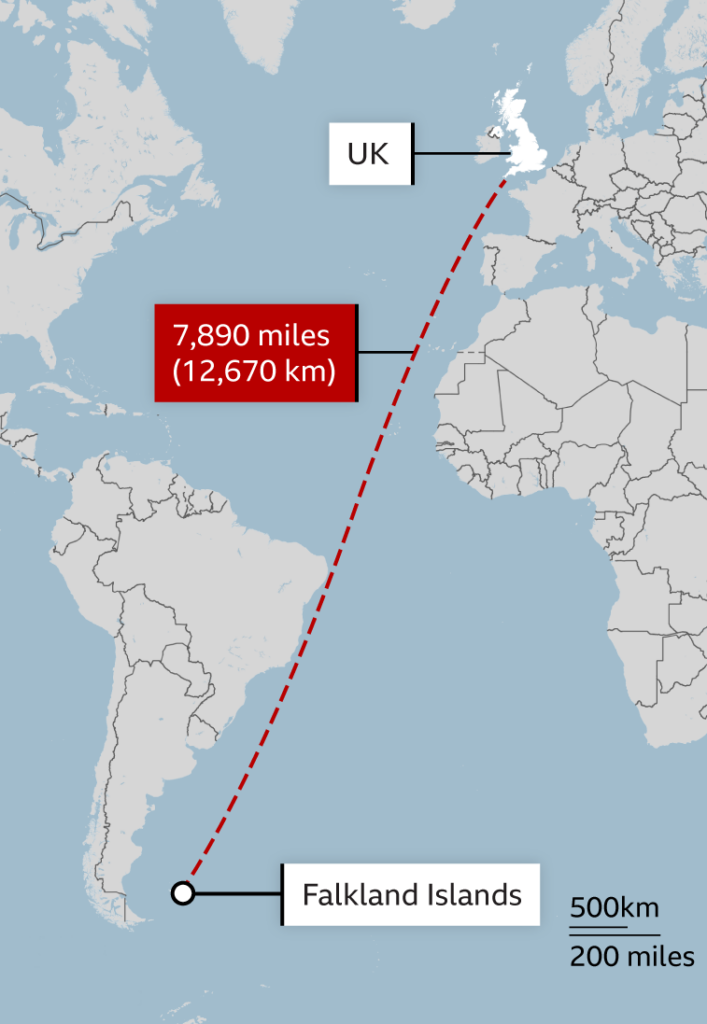
The Falkland Islands sit roughly 480km off Argentina’s coast and around 8,000 miles from Britain, yet the islands remain a British Overseas Territory — a status the vast majority of its residents support.
Argentina has never accepted this, arguing that it inherited the islands from Spain following independence in 1816, and that Britain seized them illegally in 1833.
Tensions boiled over into outright war in 1982.
The brief but bloody conflict claimed the lives of 649 Argentine soldiers and 255 British soldiers before Britain regained control of the territory. More than four decades on, the wound clearly hasn’t fully healed — and football has repeatedly become the stage where it resurfaces.
Political Reactions Add Fuel
The controversy didn’t stay confined to the stadium.
Argentine Vice President Victoria Villarruel posted a tribute to the national team on X shortly after the match, accompanied by footage appearing to show Argentine soldiers from the Falklands War — further blurring the line between sporting celebration and political statement.