Why DStv Still Uses Satellite Dishes — And Why Rain Sometimes Disrupts the Signal.
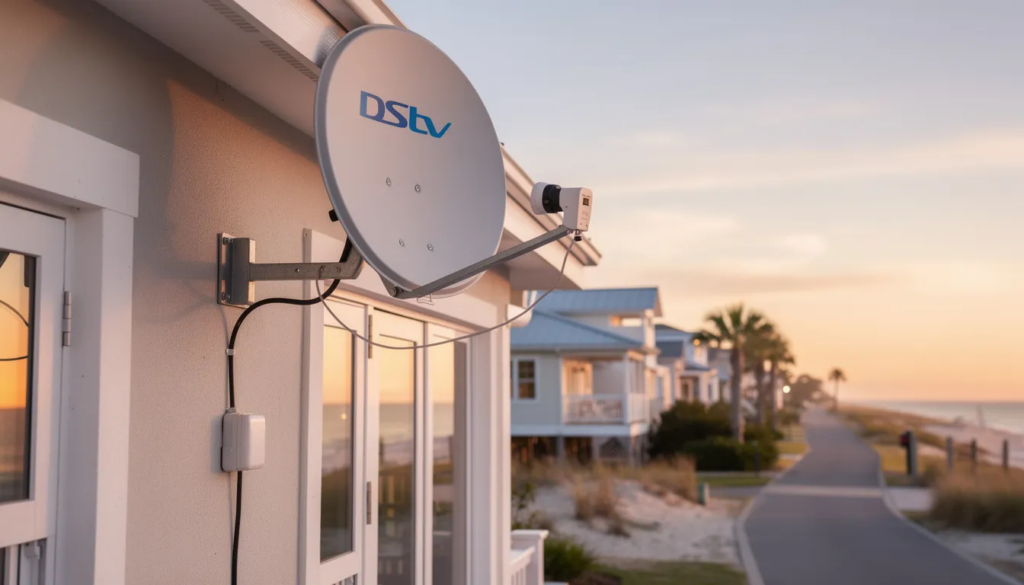
Across Africa, millions of households rely on DStv to watch football, movies, and entertainment. From the Premier League to the UEFA Champions League, satellite television has long been the main way fans receive live broadcasts.
But many viewers often ask two questions:
Why does DStv still use satellite dishes instead of internet streaming? And why do the signals sometimes disappear during heavy rain?
The answers involve how satellite technology works and the unique conditions across Africa.
Why Satellite Dishes Are Still Used
Even though internet access has improved across many African cities, the quality and reliability of connections still vary widely. Streaming live television requires a strong and stable internet, which may not always be available in every region.
Satellite broadcasting solves this problem by sending signals directly from satellites in space to the dish installed on a home. This means millions of people can receive the same broadcast without needing internet access.
This system allows companies like MultiChoice to reach viewers across large cities, small towns, and remote villages.
Satellite Is Reliable for Live Sports
Football matches attract huge audiences across Africa. When millions of people try to watch the same match online at the same time, internet networks can become overloaded.
Satellite broadcasting avoids this issue because it sends one signal to millions of dishes simultaneously. This makes it one of the most reliable ways to deliver live sports to large audiences.
Why Rain Affects Satellite Dishes
One of the most common complaints about satellite TV is that the signal sometimes disappears during heavy rain. This happens because of a phenomenon called “rain fade.”
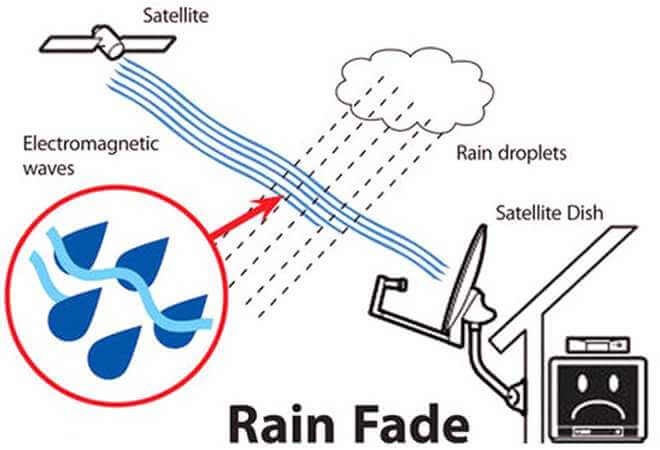
Satellite signals travel from space to Earth using high-frequency radio waves. When heavy rain, thick clouds, or storms occur, the water droplets in the atmosphere can absorb or scatter these signals.
As a result, the signal reaching the dish becomes weaker, which can cause the picture to freeze, break up, or disappear completely.
Heavy Storms Can Block the Signal
The stronger the rainstorm, the more likely the signal will be disrupted. In tropical regions where rainfall can be very intense, this interference is more noticeable.
Usually, once the rain slows down or the storm passes, the signal returns to normal almost immediately.
Installation Also Matters
The quality of a satellite signal can also depend on how well the dish is installed. A poorly aligned dish or loose cable connections can weaken the signal and make it more sensitive to weather conditions.
Proper installation and maintenance can help reduce interruptions during bad weather.
The Future: Satellite and Streaming Together
As internet infrastructure continues to improve across Africa, more viewers will likely watch television through online streaming platforms. Services such as DStv Stream already allow viewers with strong internet connections to watch matches on smartphones, tablets, and smart TVs.
However, satellite broadcasting will likely remain important for many years because it can reach millions of households quickly and reliably.
In the future, Africa’s television industry will likely combine satellite technology and internet streaming to deliver the best viewing experience.